

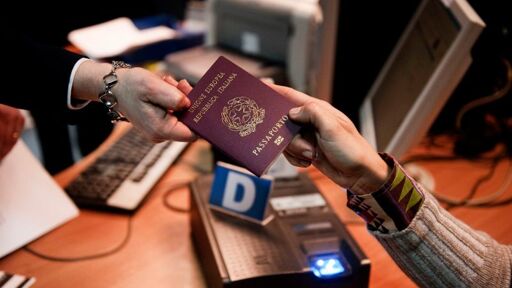
Since Italy became a country in 1861, there has been a surefire way to know who is and isn’t an Italian citizen: look at their parents.
The first page of the civil code, published in 1865 as the rulebook to Europe’s newest country, declared that a child born to an Italian citizen was an Italian citizen.
This founding tenet of the Bel Paese now looks set to change — ending diaspora dreams of returning to the mother country, and meaning that Italians who move abroad risk denying citizenship to their descendants.
On Thursday the Constitutional Court said it would rule in favor of the government and its controversial 2025 law that restricted citizenship for those born abroad. The law — issued last March via emergency decree — had been challenged by four judges, who questioned its constitutionality.
That’s a symptom of the cultural identity of italy. Italy as a nation is still very new. When italian emigrants left for other countries there was no national language. Italy was a kingdom of dialects. That’s why there’s millions of italian americans that don’t speak the language. Even if italian immigrants lived in common communities in their new countries, they may not know the dialect of their neighbors. So instead, they learned the local language and let their dialect die so they could communicate.
deleted by creator
Italy is literally one of the first national states, wtf are you talking about?
Assimilation is a thing. Unless you segregate your ethnic group, you’re bound to become part of local culture, rather than maintain your original one, regardless whether or not there is a language standard present in your historical motherland.
A dialect is a dialect. It is still a part of the same language.
The United States is older than Italy. Italy wasn’t a unified nation until 1871. The United States became a country in 1776. And Italians did segregate into ethnic centers of cities in the United States. Chicago, New York, and St. Louis all have heavy italian presence within certain neighborhoods but even still lost their language. Italian dialects are not the same as regional accents. The nationalization of the italian language was still underway well into the 20th century. The Florentine dialect was only spoken by about 10% of the population in the 1870’s at most. It wasn’t until mass market radio and TV came along that it began to rapidly spread.
Nation state and a cultural identity are not the same thing. A single language is related to the former but also not really the defining feature. The idea of Italy existed for centuries before it became one. Nation state as a concept is recent enough that it only started becoming popular after the United States was founded, from the French revolution onwards.